1986
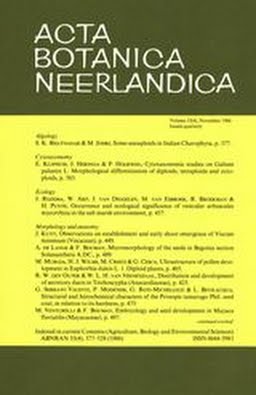
Cytotaxonomic studies on Galium palustre L. Morphological differentiation of diploids, tetraploids and octoploids
Publication
Publication
Acta botanica neerlandica , Volume 35 - Issue 4 p. 383- 392
Three cytoptypes of Galium palustre L., i.e. diploids (2n = 24), tetraploids (2n = 48) and octoploids (2n = 96), were subjected to a morphological investigation using pattern detection methods. Diploids and octoploids form two well distinguishable groups. However, it is impossible to differentiate three separate groups. This is mainly due to the intermediate position of the tetraploid cytotype, the characters of which may overlap with those of diploids and octoploids, but to a larger degree with the latter.
| Additional Metadata | |
|---|---|
| Acta botanica neerlandica | |
| CC BY 3.0 NL ("Naamsvermelding") | |
| Organisation | Koninklijke Nederlandse Botanische Vereniging |
|
E. Kliphuis, J. Heringa& P. Hogeweg. (1986). Cytotaxonomic studies on Galium palustre L. Morphological differentiation of diploids, tetraploids and octoploids. Acta Botanica Neerlandica, 35(4), 383–392. |
|